
ALGA Awards 2026 Finalist: Australia's First CAT 100 Remediation Project
At Legion Drilling, we believe innovation is more than adopting new technology. It is about delivering practical solutions that reduce risk, minimise disruption, and achieve measurable outcomes for clients.
That is why we are proud to have contributed to a project recognised as a finalist in the ALGA Awards 2026 under the category Innovation in Contaminated Land and Groundwater Practice.
Delivered in partnership with Senversa and AST Environmental, the project involved Australia's first CAT 100 remediation injection program, successfully treating chlorinated hydrocarbon contamination beneath an active Sydney roadway without excavation, road closures, or disruption to traffic.
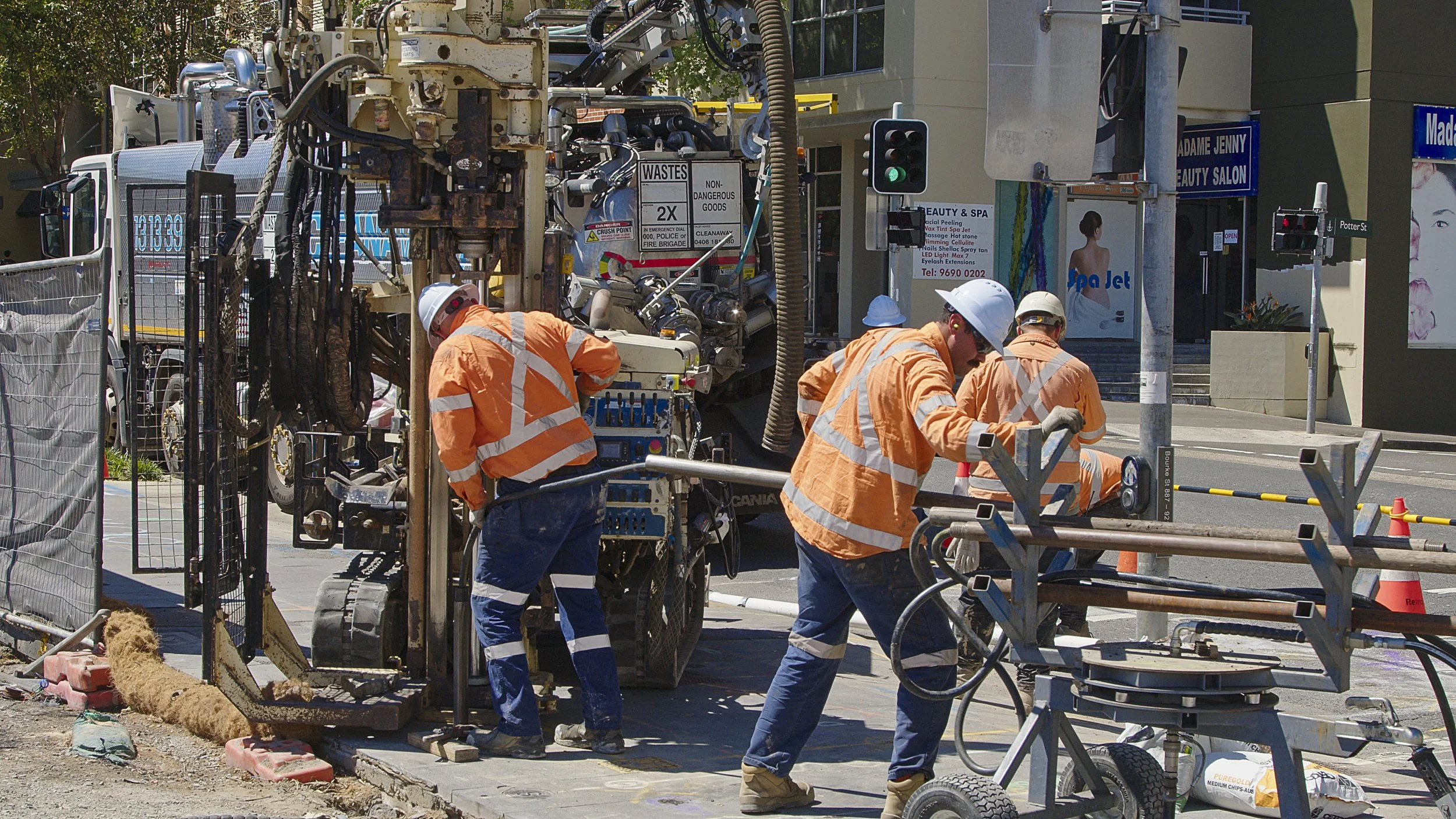
The direct push rig set up at a street intersection with a vacuum truck on standby. Injection work beneath an operating carriageway leaves no margin for surface breakout.
Solving a Complex Contamination Challenge
The contamination was located beneath a busy roadway, public transport corridor, and pedestrian infrastructure. Traditional remediation methods would likely have required significant excavation works, contaminated spoil removal, traffic management, and disruption to the surrounding community.
Instead, the project team pursued an innovative in-situ remediation approach, allowing contamination to be treated below ground while keeping the road fully operational.
This approach reduced project impacts, minimised risk, and avoided the significant cost and disruption often associated with excavation-based remediation.
Australia's First CAT 100 Application
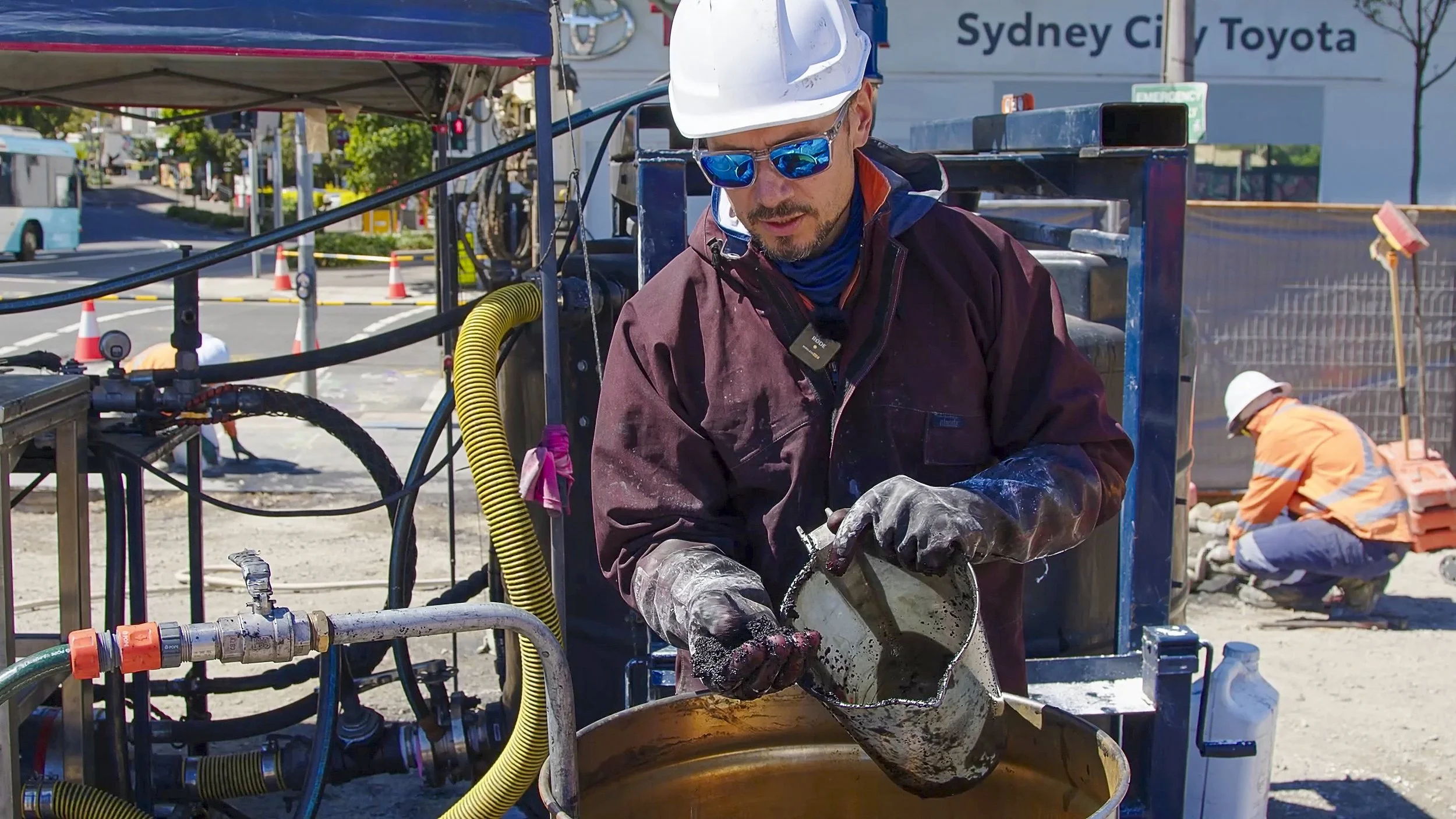
Carbon amendment at working consistency. Preparation is the part of the job that decides whether an interval can be placed in one pass.
The project marked the first application of CAT 100 technology in Australia.
Using a combination of granular activated carbon, zero-valent iron, and specialised microbial cultures, the treatment was designed to immobilise contaminants, promote chemical breakdown, and support long-term biological degradation within the subsurface.
To deliver the program, Legion Drilling utilised specialist direct-push drilling technology and custom-built injection equipment designed specifically for remediation applications.
Every injection point required precise control of depth, pressure, flow rates, and treatment volumes to ensure the product was delivered accurately within the target zone while protecting the integrity of the roadway above.
Delivering Measurable Results
Almost 12 months after implementation, monitoring data demonstrated exceptional remediation performance.
Key outcomes included:
Significant reduction in the contaminant plume
Contaminant concentrations reduced by several orders of magnitude
Some monitoring locations reduced from more than 60 mg/L to approximately 1-2 mg/L
Increased biological activity throughout the treatment area
Evidence of ongoing contaminant degradation towards non-toxic end products
These results demonstrate the effectiveness of advanced in-situ remediation technologies when combined with specialist drilling expertise and precise project execution.
Why This Matters
Across Australia, many contaminated sites are located beneath roads, industrial facilities, airports, service stations, and operating commercial infrastructure where excavation may be impractical, costly, or highly disruptive.
This project demonstrates how innovative remediation technologies can provide a practical alternative, enabling contamination to be treated in place while reducing environmental impacts, protecting critical infrastructure, and maintaining normal site operations.
Driving Innovation in Environmental Drilling
Being recognised as an ALGA Awards finalist highlights the importance of innovation in advancing contaminated land and groundwater remediation practices.
For Legion Drilling, this project showcases our capability to deliver complex remediation projects requiring precision drilling, specialist injection systems, rigorous quality assurance, and technical expertise.
Most importantly, it provides a proven Australian reference for consultants, regulators, and site owners seeking effective, low-impact remediation solutions for complex contaminated land challenges.
As demand for sustainable remediation continues to grow, projects like this demonstrate how innovation, collaboration, and specialist expertise can deliver better outcomes for both the environment and the communities we serve.