
Flinders River alluvium - SP16 ground water Sampling - Northern Queensland

Figure 1. Direct-push drilling with Geoprobe 7822DT
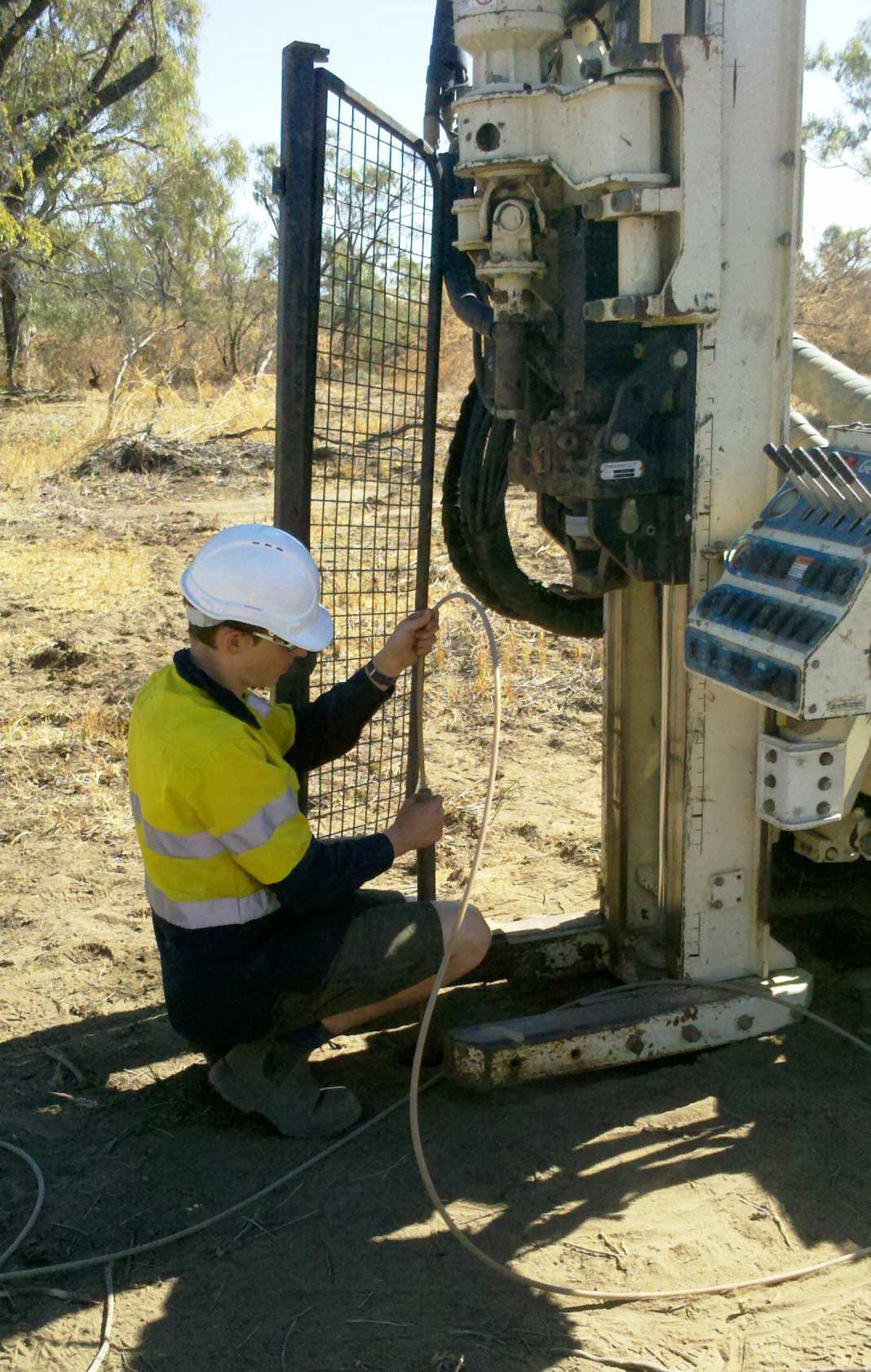
Collecting groundwater
samples using an inertial pump.
Project Objectives
CSIRO’s research aimed to evaluate direct push techniques for collecting groundwater samples for environmental tracer analysis. The project had two primary goals:
Provide a cost-effective alternative to traditional piezometer networks for mapping shallow alluvial groundwater in remote regions.
Enable detailed characterisation of the hydrogeological properties of the alluvium through the collection and interpretation of environmental tracers.
By avoiding the installation of permanent infrastructure, the approach allowed CSIRO to efficiently collect groundwater level, quality, and vertical tracer profile data across a broad area with minimal site disturbance.
Methodology and Equipment
Legion Drilling mobilised a Geoprobe 7822DT — a high-capacity, highly mobile direct push rig capable of both rotary air drilling and hydraulic pushing/hammering of sampling tools. The rig was equipped with an SP16 sampler, specifically chosen for its ability to collect high-quality groundwater samples from unconsolidated sediments.
Over a four-day period, Legion Drilling completed 21 shallow direct push holes to a maximum depth of 20 metres, achieving a total of 294 linear metres of drilling. The method proved highly effective for rapid data collection across multiple locations without the need for permanent well installation.
Key Outcomes
Efficient collection of physical and chemical groundwater parameters to depths of up to 20 m.
Successful recovery of environmental tracer samples across a wide area.
Three holes reached 15 m without encountering sufficient water-bearing sediments, providing valuable negative data for the hydrogeological model.
Minimal environmental footprint in a remote, sensitive alluvial environment.
Rapid mobilisation and execution, ideal for exploratory and proof-of-concept studies.
Why Direct Push Drilling Was the Right Choice
Direct push technology offers significant advantages for this type of scientific investigation:
Fast drilling rates in unconsolidated alluvial sediments.
High-quality, low-disturbance groundwater samples.
Ability to collect continuous vertical profiles without installing permanent infrastructure.
Excellent mobility and low site impact — critical in remote Northern Australia.
Cost-effective data collection over large areas compared to traditional piezometer installations.
Demonstrating Capability in Remote Groundwater Investigations
This project highlights Legion Drilling’s experience delivering specialised direct push groundwater sampling programs for leading research organisations. Our team’s ability to operate efficiently in remote locations, combined with advanced Geoprobe equipment, enables clients like CSIRO to gather critical hydrogeological data quickly and cost-effectively.
Need expert direct push or sonic drilling support for your groundwater or environmental investigation?
Contact Legion Drilling to discuss how we can assist with your next project in remote or challenging environments.
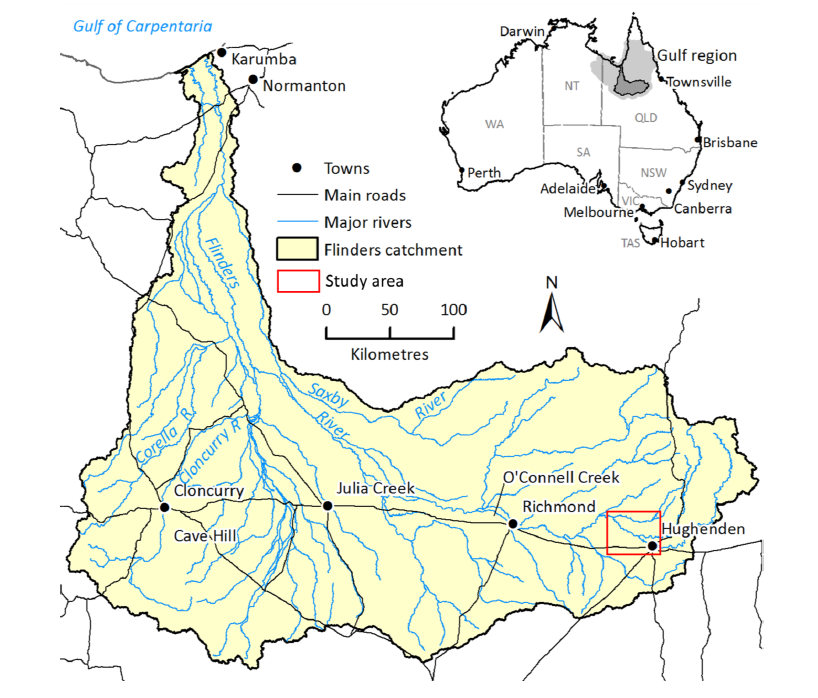
CSIRO is conducting a proof of concept project that will evaluate direct-push techniques to sample groundwater for environmental tracers in the Flinders River alluvium. The project has two main objectives: 1) provide an alternate method to piezometer networks for collecting alluvial groundwater, in other words a cost-effective method for characterising shallow groundwater resources in remote Northern Australia and 2) enable the characterisation of the hydrogeological properties of the alluvium through collection and interpretation of environmental tracers in groundwater.
"....Due to the remote and exploratory nature of the work, direct-push drilling was utilised without installing permanent infrastructure, to efficiently map groundwater levels, groundwater quality and collect vertical profiles of environmental tracers across a broad area. The drilling equipment consisted of a Geoprobe Systems 7822DT (Figure 1.1) which is capable of rotary air drilling and hydraulically pushing and hammering a variety of tools, rod string and core barrel into unconsolidated sediments, to a maximum depth of approximately 30 m...Over a four day period, a total of 21 holes were drilled up to a maximum depth of 20 m, resulting in a cumulative total of 294 m of drilling. On three occasions, holes were drilled to a maximum of 15 m without encountering sediments yielding sufficient water for groundwater sampling"
Andrew R Taylor
Experimental Scientist | Environmental Tracers and Applications
Water Resources Management
Land & Water Flagship
CSIRO

Groundwater samples including tritium, carbon-14 and the stable isotopes of water, collected using the SP16 sampler